> For the complete documentation index, see [llms.txt](https://1ex.gitbook.io/1ex-smart-dom/llms.txt). Markdown versions of documentation pages are available by appending `.md` to page URLs; this page is available as [Markdown](https://1ex.gitbook.io/1ex-smart-dom/working-space-and-interface.md).
# Working space and interface
Main space of the 1EX Terminal
Interface
### Working space
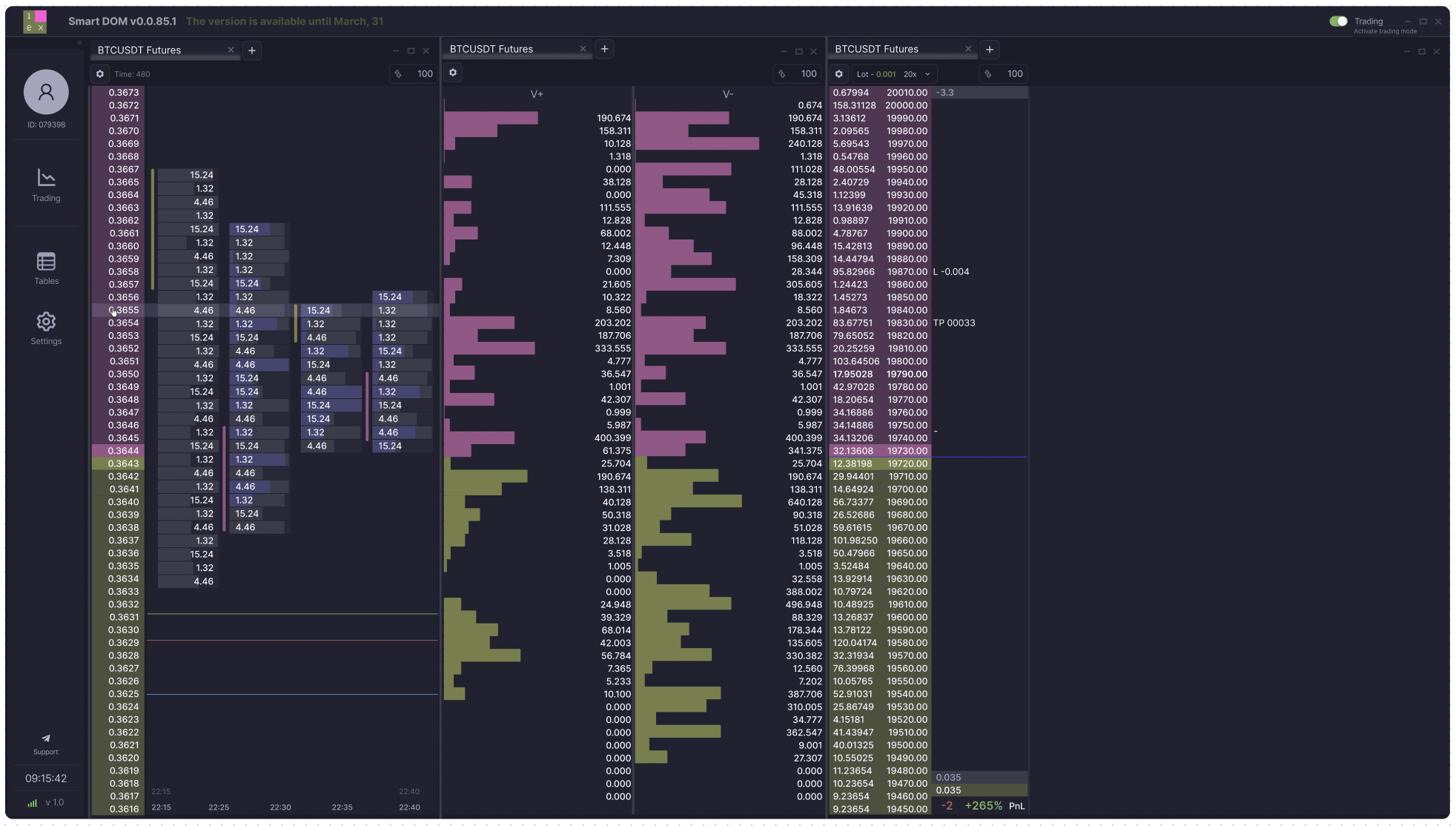
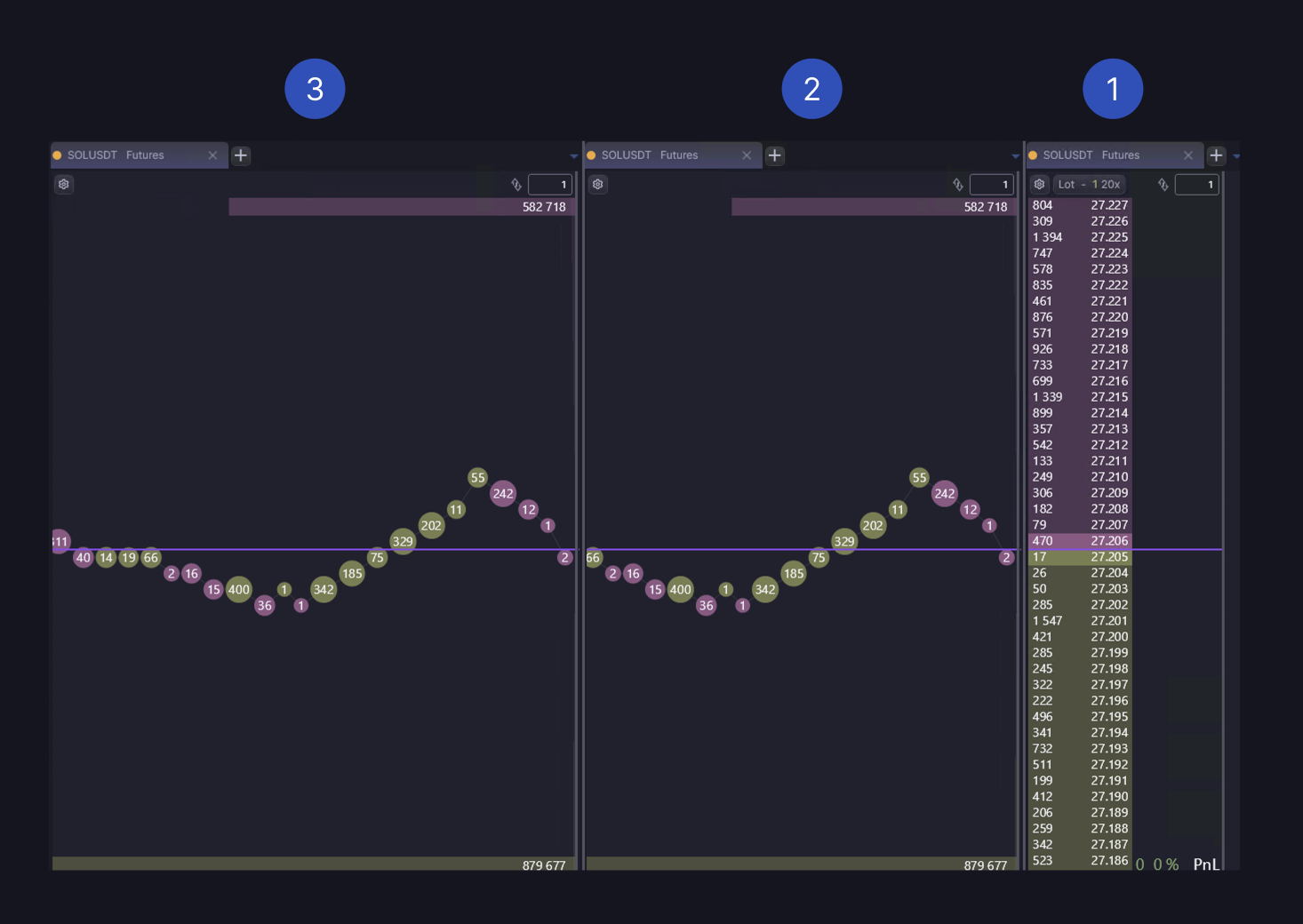
The main component of the interface is the workspace, where the main elements of the terminal are indicated as follows:
* Order Book[ (DOM)](/1ex-smart-dom/features/order-book-dom.md)
* Modules of the Order Book
* Ticker Tape[ (Time\&Sales)](/1ex-smart-dom/features/ticker-tape-time-and-sales.md)
* Clusters
* Candle Charts
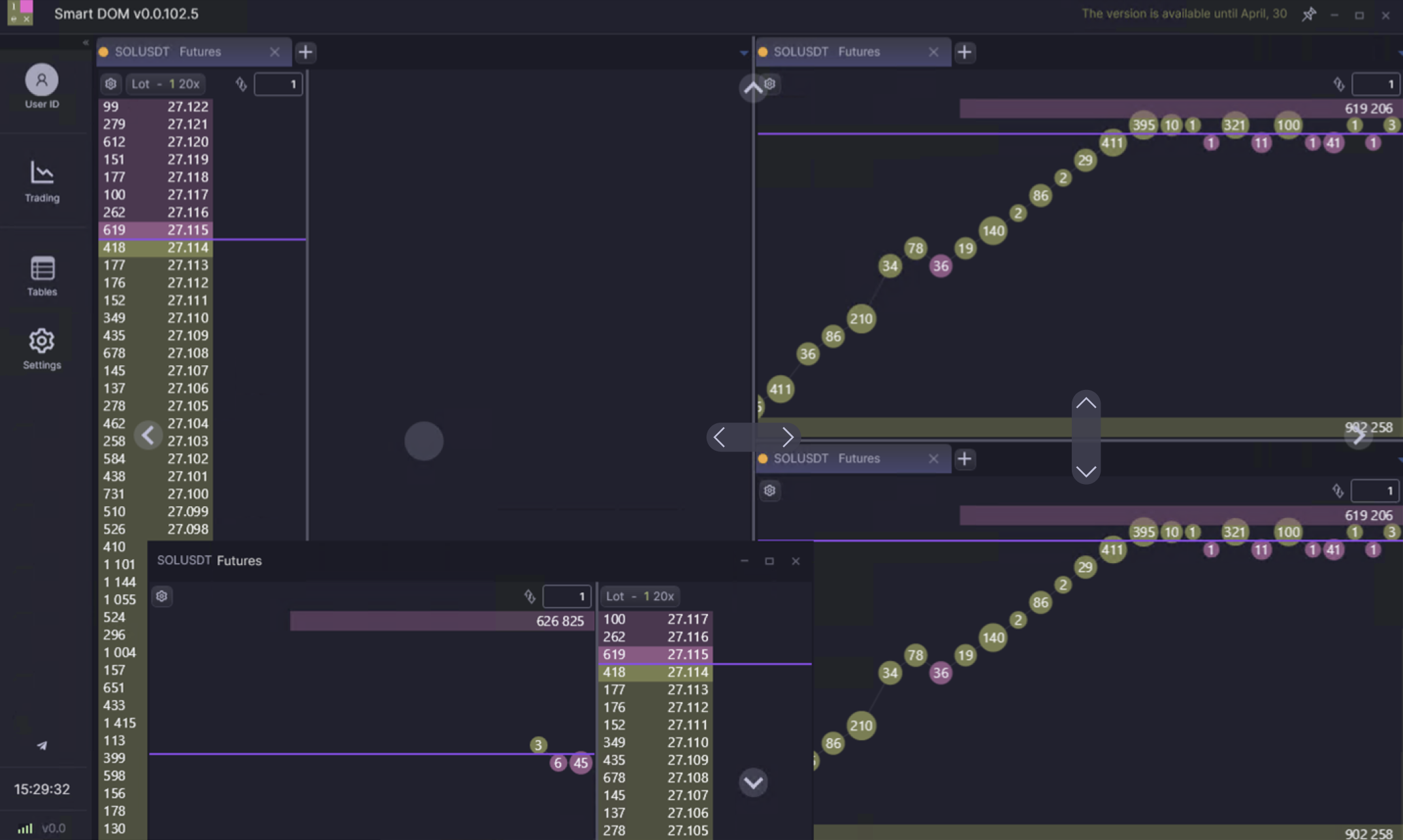
Each element is located on a separate tab, has its own settings and a separate trading block. It is possible to open each element independently of each other, so you can assemble a workspace only from the elements you need.
An example of building a workspace
Tabs can be moved both vertically and horizontally.
Moving tabs inside the workspace
#### Sawing working space
Tabs, windows, settings, and connections are saved automatically when you close the terminal.
### Widgets and side panel
* Each trading element has several widgets:
* Settings - each trading element has a number of individual settings.
* Working volume - allows you to select a working volume in the required size. It displays the lot size and leverage size when closed.
* When the window opens it shows:
* Balance
* Choice of calculation as a percentage of the base or quotation currency
* Lot size
* Minimum available volume
* Maximum available volume for purchase
* Maximum available volume for sale
* A price multiplier is a numerical multiplier that allows you to change the visible range of prices in the Order Book (a close analogy is the scale of a map). For example, with a multiplier of 1, the price step in the order book is equal to the instrument step. And with a multiplier of 10, the price step increases 10 times and allows the user to see an increased price range. It is possible to select a multiplier value from those proposed or add your own in a separate input field.
**Side panel**
The side panel is a part of the interface and makes it possible to access the main elements of the Order Book.